
Cyclic Peptides: Prominent Next Generation Targeted Therapies
- Open Access
- Peer Reviewed
- Similarity Checked
- CC BY 4.0
Abstract
Cyclic peptides are expected to play a significant role in the future of drug discovery and development. Their unique properties, such as enhanced target affinity, metabolic stability, and favorable pharmokinetic profiles, make them promising candidates for addressing complex therapeutic targets. Innovations in design and synthetic techniques, including phage display and genetic code expansion with noncanonical amino acids, are enabling the development of diverse cyclic peptide libraries. These advancements are expected to bridge the gap between traditional small molecules and biologics, offering significant promise in the treatment of complex diseases.
The therapeutic potential of cyclic peptides is broad, with applications in various pharmacological activities, including antibiotics, antifungals, anticancer, and immunosuppressants. The number of cyclic peptide drugs under research has reached hundreds, some have entered the late clinical stage. With ongoing research, more cyclic peptide drugs are expected to be approved and enter the market in the future.
Cyclic peptides are also valuable research tools, suitable for probes that selectively modulate target proteins or high affinity ligands for biomolecular imaging. The development of selection strategies and various cyclization strategies, non-natural amino acids, and functional building blocks further enhance their functionality and utility in drug development.
In summary, Cyclic peptides are poised to be a valuable class of molecules in the future, with ongoing research and development efforts aimed at optimizing their properties and expanding their therapeutic applications.
Article Information
- Received
- Accepted
- Published
Academic Editor: Anubha Bajaj, Consultant Histopathologist, A.B. Diagnostics, Delhi, India.
Checked for plagiarism: Yes
Review by: Single-blind
Copyright © 2026 Manjula Reddy Pallerla, et al.
 This is an open-access article distributed under the terms of the Creative Commons Attribution License, which permits unrestricted use, distribution, and reproduction in any medium, provided the original author and source are credited.
Corresponding author: Manjula Reddy Pallerla, Peptide R&D, Matrix, Pharmacorp, Pvt, Ltd. Plot No. 1-60/35/A, 6th to 9th Floor, HITEC City, Phase II, Gachibowli, Serilingampally, Mandal, Ranga Reddy District, Hyderabad, Telangana, India, Pin code - 500 081 —
Competing Interests
The authors have no competing or financial interests to disclose.
Funding
No specific funding statement was provided by the authors.
Data Availability
No data-availability statement was provided by the authors.
Citation:
Introduction
Cyclic peptide drugs represent a unique category of therapeutics that offer improved stability, specificity for targets, and the potential for oral bioavailability, effectively bridging the characteristics of small molecules and biologics 1, 2, 3, 4, 5, 6, 7, 8, 9, 10, 11, 12 (Table 1). These peptides are created by connecting the N and C-termini or side chains of linear peptides, resulting in a ring-like structure that enhances conformational rigidity and binding affinity to targets. This cyclization not only increases metabolic stability and resistance to proteolytic degradation but also diminishes polarity by removing free terminal groups, which can enhance membrane permeability and facilitate the targeting of intracellular proteins, an advantage not typically seen with linear peptides or larger biologics such as antibodies 13, 14, 15. Furthermore, cyclic peptides can effectively bind to complex protein surfaces, including those involved in protein-protein interactions that are often deemed "undruggable" by traditional drugs, thus merging the selectivity of biologics with the cell permeability of small molecules, making them highly valuable in drug discovery 16, 17, 18. As of June 2024, a total of sixty-six cyclic peptide drugs has received global approval (Table 2), with 39 of these approved since 2000. Notable examples include Rezafungin, an antifungal for candidemia, Motixafortide, a CXCR4 antagonist for multiple myeloma, and Zilucoplan 19, a self-administered C5 inhibitor for generalized myasthenia gravis (Figure 1). While cyclic peptides primarily target extracellular proteins, like cyclosporine, demonstrate oral bioavailability 20 and the ability to traverse cell membranes despite their high molecular weight, attributed to favorable intramolecular hydrogen bonding and reduced polarity. To address challenges such as poor metabolic stability and limited membrane permeability, various strategies are employed, including backbone modifications that incorporate D-amino acids, N-Me & alpha methylated AA and fatty acid linkages 21, 22.
Table 1. Properties of Cyclic peptides Vs Linear Peptides| Property | Cyclic peptides | Linear peptides |
|---|---|---|
| Confirmation | Restricted | Flexible |
| Terminal Residues | Absent or less | Present |
| Polarity | Lower | Higher |
| Affinity | Higher | Lower |
| Hydrogen Bonds | Intramolecular | Intermolecular |
| Permeability | Higher | Lower |
| Oral Administration | Feasible | Less likely |
| Stability | Higher | Lower |
| Intracellular targets | Feasible | Less likely |
| Trade name | Generic Name | Target | Indication | Approval |
|---|---|---|---|---|
| Istodax | Romidepsin | Histone deacetylases | Anticancer | 2009 |
| Lupkynis | Voclosporin | Calcineurin | Lupus nephritis | 2021 |
| Prialt | Ziconotide | Calcium channel | Severe and Chronic pain | 2004 |
| Lizness | Linaclotide | Guanylate cyclase | Irritable bowel syndrome | 2012 |
| Trulance | plecanatide | Guanylate cyclase | Chronic idiopathic constipation | 2017 |
| Signifor | Pasireotide | Somatostatin receptor | Cushing’s disease | 2012 |
| Somatuline | Lanreotide | Somatostatin receptor | Neuroendocrine tumors | 2007 |
| Vasostrict | Vasopressin | Vasopressin receptor | Antidiuretic hormone deficiency | 2014 |
| Teripressin | Terlipressin | Vasopressin receptor | Low blood pressure | 2009 |
| Vylessi | Bremelanotide | Melanocortin receptors | Hypoactive sexual desire disorder | 2019 |
| Imcivree | Setmelanotide | Melanocortin 4 receptor | obesity | 2020 |
| Cubicin | Daptomycin | Membrane pore formation | Antibiotic | 2005 |
| Vibative | Telavancin | Cell wall synthesis | Antibiotic | 2009 |
| Dalvance | Dalbavancin | Cell wall synthesis | Antibiotic | 2014 |
| Orbactiv | Oritavancin | Cell wall synthesis | Antibiotic | 2014 |
| Cancidas | Caspofungin | 1,3-β-glucan synthase | antifungal | 2001 |
| Mycamine | Micafungin | 1,3-β-glucan synthase | antifungal | 2005 |
| Eraxis | Anidulafungin | 1,3-β-glucan synthase | antifungal | 2006 |
| Lutathera | 177Lu-DOTA-TATE | Somatostatin receptor | Neuroendocrine tumors | 2018 |
Figure 1. FDA approved peptides in 2023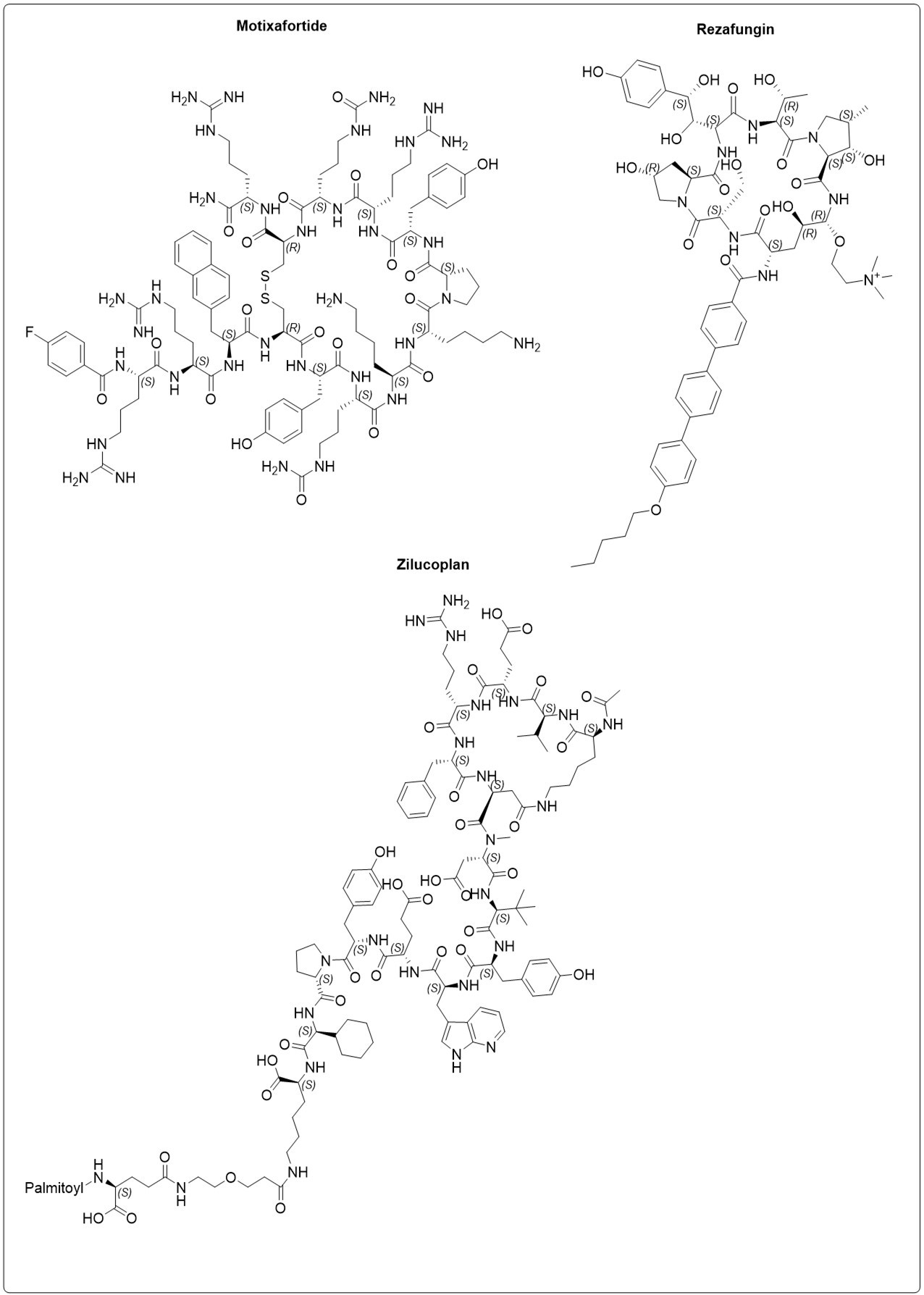
Download figure
Screening technologies such as phage and mRNA display have broadened the scope of macrocyclic peptide pharmaceuticals leading to the development of new drugs against diverse targets. The combination of such techniques with genetic code reprogramming has further broadened the utility of macrocyclic peptides by allowing the discovery of orally available molecules capable of intracellular targeting. The coming decade is highly likely to see the approval of numerous entirely novel macrocyclic peptide-based drugs 23, 24, 25, 26, 27, 28, 29, 30 (Table 3).
Table 3. Macrocyclic peptides in Clinical trials| Drug Name | Highest Clinical Phase | Source Type | Clinical Trial ID | Route of Administration |
|---|---|---|---|---|
| AP301 | Phase III | Natural product derivative | NCT07030595 | Oral |
| BMS-986229 | Phase III | mRNA display | NCT04161781 | Injectable |
| JNJ-2113 | FDA approved/Mar 2026 | Phage display | NCT05364554 | Oral |
| MK-0616 | FDA approved/June 2026 | mRNA display | NCT07216482 | Oral |
| ORMD-0801 | Phase III | Natural product derivative | NCT06731075 | Oral |
| PL9643 | Phase III | Natural product derivative | NCT05201170 | Ophthalmic |
| Plitidepsin | Phase III | Natural product source | NCT01102426 | Injectable |
| Balixafortide | Phase III | Natural product derivative | NCT03786094 | Injectable |
| Rusfertide | Phase III | Natural product derivative | NCT05210790 | Injectable |
| BT8009 | Phase II/III | Phage display | NCT04561362 | Injectable |
| VT1021 | Phase II/III | Natural product derivative | NCT03364400 | Injectable |
| ALRN-6924 | Phase II | Stapled peptide design | NCT02264613 | Injectable |
| AMY-101 | Phase II | Phage display | NCT04395456 | Injectable |
| AZP-3813 | Phase II | mRNA display | NCT05239221 | Injectable |
| Certepediol | Phase II | Phage display | NCT03517116 | Injectable |
| Dolcamatide | Phase II | Natural product derivative | NCT03300570 | Oral |
| PL8177 | Phase II | Natural product derivative | NCT05466890 | Oral |
| THR-149 | Phase II | Phage display | NCT04527107 | Injectable |
| TE-232 | Phase II | Natural product derivative | NCT06801236 | Injectable |
| BHV-1100 | Phase I/II | mRNA display | NCT04634435 | Injectable |
| BT1718 | Phase I/II | Phage display | NCT03486730 | Injectable |
| FOG-001 | Phase I/II | Phage display | NCT05919264 | Injectable |
| Lonodelestat | Phase I/II | NCT03748199 | Inhalation | |
| BT5528 | Phase I/II | Phage display | NCT04180371 | Injectable |
| BT7480 | Phase I/II | Phage display | NCT05163041 | Injectable |
| LUNA18 | Phase I | mRNA display | NCT05012618 | Oral |
These recent approvals underscore the increasing significance of cyclic peptides within the pharmaceutical sector, as they provide enhanced drug-like characteristics and improved stability.
Cyclic peptides exhibit improved pharmacokinetic properties compared to linear peptides due to their cyclized structure, which enhances conformational rigidity, proteolytic stability, and binding affinity 31, 32, 33, 34. They are less susceptible to enzymatic degradation and have a longer half-life, making them more stable in the bloodstream. However, they still face challenges such as low oral bioavailability and rapid clearance, which can be mitigated through various strategies, including backbone engineering, side chain modification, and attachment to other carrier moieties. These adaptations help improve the pharmacokinetic profiles of cyclic peptides, making them suitable for various therapeutic applications.
Emerging Technology
Emerging technologies in peptide synthesis and purification are significantly transforming the field, driven by innovations such as green chemistry, artificial intelligence, continuous-flow techniques, and advanced downstream processing. While Solid-Phase Peptide Synthesis (SPPS) remains the leading method, it is increasingly challenged by its environmental impact and high solvent consumption, prompting the adoption of green chemistry principles to enhance sustainability in large-scale production. The future of green chemistry in peptide synthesis appears highly promising, driven by ongoing research aimed at developing sustainable and efficient methodologies 35. Innovations in synthesis processes, such as liquid-phase and enzymatic peptide synthesis, are being investigated to minimize waste and enhance efficiency. Additionally, advancements in purification technologies, including continuous-flow synthesis and improved chromatographic techniques, are being designed to streamline purification while reducing chemical waste. The application of the 12 principles of green chemistry is also pivotal, as it guides the design of processes that limit the use of hazardous substances without sacrificing product quality. Furthermore, the integration of artificial intelligence and automation is optimizing reaction conditions, thereby reducing trial-and-error waste and expediting sustainable peptide manufacturing. Circular economy models are being explored to establish a sustainable peptide production framework that minimizes chemical waste and encourages recycling. Collectively, these advancements not only address environmental challenges but also enhance the efficiency and sustainability of peptide production, positioning green chemistry as a vital component in the future of the peptide industry.
Furthermore, advancements in purification technologies are crucial for therapeutic peptides, particularly for complex molecules like GLP-1 receptor agonists, as they now incorporate digital solutions and data analytics to optimize processes, improve yields, and allow for real-time troubleshooting.
Cyclic peptides are a transformative class of therapeutics, uniquely positioned between traditional small molecules and large biologics in modern drug discovery. They offer enhanced conformational rigidity, proteolytic stability, and exceptional target affinity, enabling them to engage challenging molecular surfaces, especially protein-protein interactions (PPIs) long considered "undruggable" by conventional modalities.
Advancements in peptide engineering, computational design, and high-throughput screening accelerate the development of cyclic peptides, which now offer a powerful strategy for overcoming historical limitations in specificity, selectivity, and delivery.
The biopharmaceutical industry increasingly views cyclic peptides as a versatile and scalable platform for next-generation drug design, offering several key advantages that significantly enhance their therapeutic potential compared with their linear counterparts.
Types of cyclic peptides
Cyclic peptides are polypeptide chains characterized by a circular structure formed through various chemical linkages. They can be categorized based on the types of bonds that create the ring, including homodetic cyclic peptides, which consist of standard peptide bonds, as seen in cyclosporin A; cyclic isopeptides, which feature at least one non-alpha amide linkage, exemplified by bacitracin; cyclic depsipeptides 36, which incorporate at least one lactone linkage, such as aureobasidin A; and bicyclic peptides, which contain structures with bridging groups, like amanitins. These cyclic peptides possess distinctive properties, including enhanced stability and conformational rigidity, rendering them highly valuable in drug development and various biological applications.
Peptide modifications
The landscape of peptide drug design is undergoing significant transformation, propelled by technological advancements and novel therapeutic applications. Solid-phase peptide synthesis has emerged as a fundamental technique, enhancing the efficiency and specificity of peptide production, thereby solidifying its role in peptide therapeutics. Additionally, recombinant technologies have improved the production of peptides with optimized characteristics, such as enhanced stability and bioavailability. The advent of macrocyclization chemistry facilitates the creation of intricate peptide structures tailored for specific therapeutic outcomes. Furthermore, rational design strategies have played a crucial role in addressing historical challenges in peptide development, including issues related to poor oral bioavailability and rapid degradation by proteolytic enzymes. Innovations in delivery systems, including cell-penetrating peptides, nanocarriers, and peptide-drug conjugates, have broadened the clinical applicability of peptides, extending their use beyond traditional injectable forms. Collectively, these advancements have transitioned peptides from theoretical constructs to clinically approved entities, with nearly 100 drugs currently available and many more in advanced stages of development, marking a significant renaissance in peptide therapeutics that is vital for the future of drug design and development.
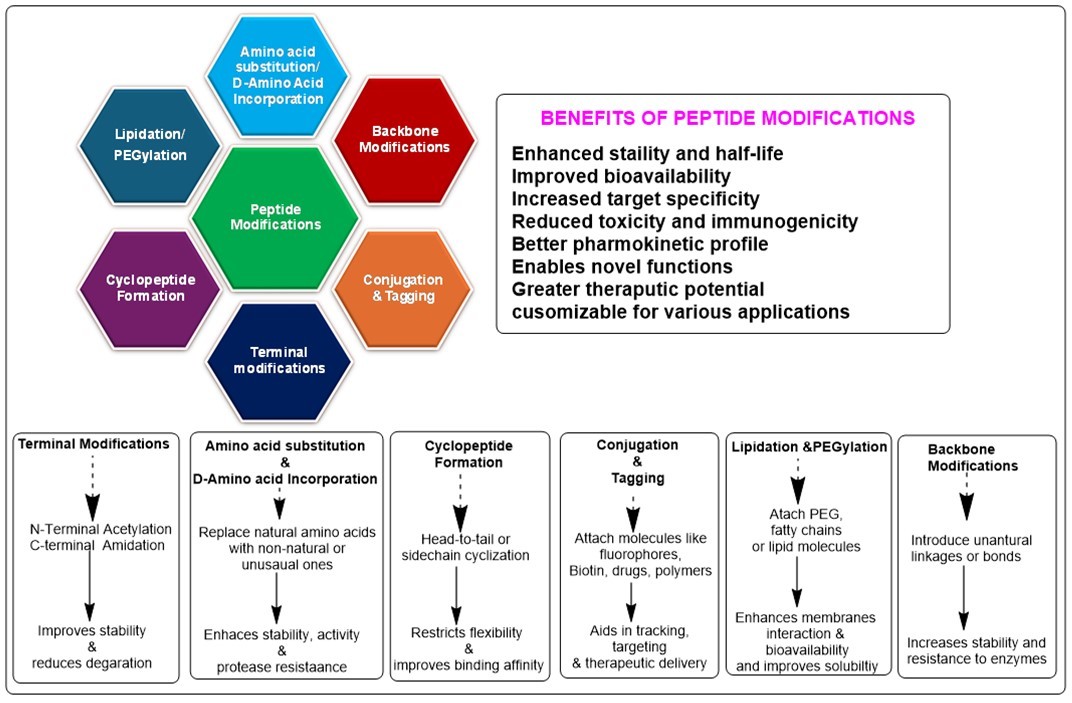
Strategies to enhance stability include
· Backbone Modifications: Incorporating D-amino acids, non-canonical amino acids (e.g., β-/γ-amino acids), and N-methylation. Bioisosteric modifications could preserve pharmacophore geometry while enhancing metabolic stability.
· Cyclization Optimization: Selecting optimal ring size and introducing double cyclization to reduce conformational flexibility and proteolytic degradation 38, 39, 40.
Secondary Structure Stabilization: Using α-helices, β-sheets, stapled peptides, or α/β-hybrid peptides 37.
Various strategies and their Key advantages/Key Limitations
Head-to-Tail
This method involves forming an amide bond between the N-terminus and C- terminus of a linear peptide. It is the most intuitive approach and is commonly used to generate cyclic peptide libraries (Figure 2).
Figure 2. Types of cyclic peptides 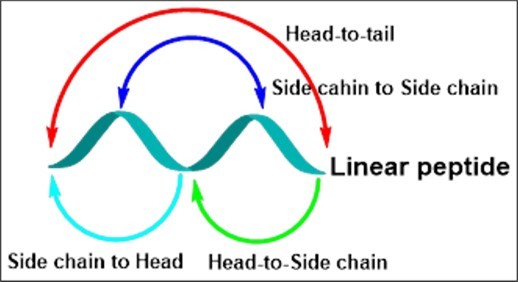
Download figure
Side-Chain-to-Sidechain
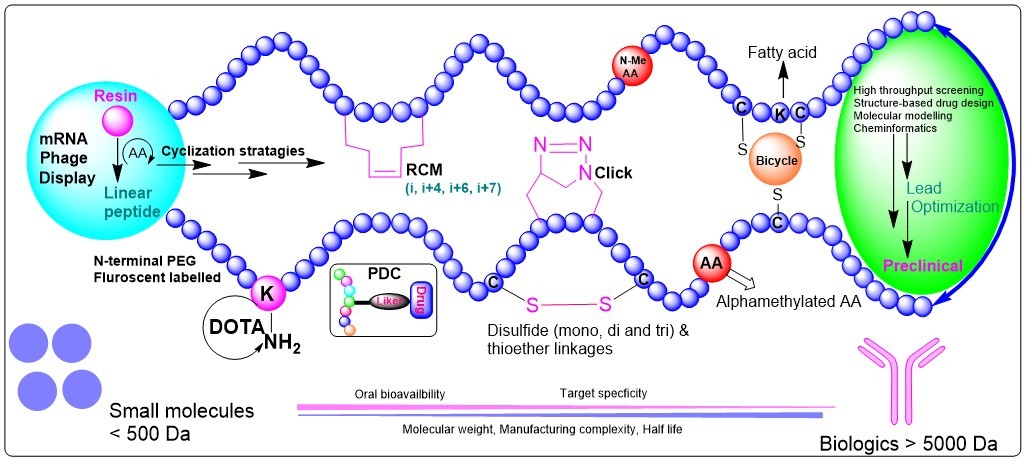
This approach forms covalent bonds between reactive side chains of amino acids within the same peptide, such as cysteine-cysteine disulfide bridges, Lactamization, lactonization, dithiol-bis alkylation, Click chemistry and Ring close Metathesis (RCM, i, i+3, i+4, i+6 and i+7) 41, 42, 43 (Figure 3).
Figure 3. Types of different side chain to side chain cyclization strategy 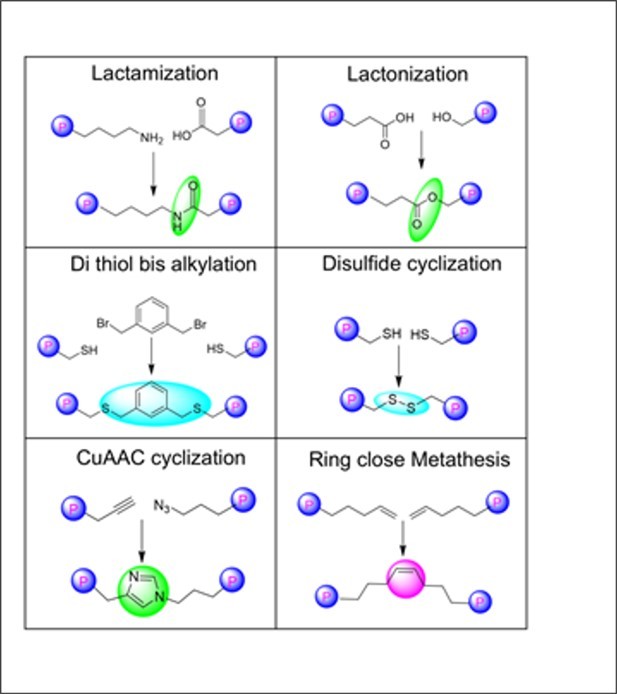
Download figure
Head-to-Sidechain and Side-Chain-to-Tail
These less common methods involve linking the N- or C-terminus to a side chain, providing additional structural diversity and conformational control. They are useful for designing peptides with specific spatial arrangements or functional motifs.
| S. No | Cyclization Strategy | Key advantages | Key Limitations |
|---|---|---|---|
| 01 | N-Methylation | Enhance a peptide's resistance to enzymatic degradation | Reduced binding affinity or selectivity |
| 02 | D-Amino acids | Proteolytic stability and antimicrobial activity | Complicate the synthetic process |
| 03 | Lipidation | Improves stability and half-life of peptides | Formulation Challenges |
| 04 | Disulfide formation | Reduces flexibility and improves binding affinity | Combinatorial Challenge |
| 05 | Noncanonical amino acids | Enhanced stability and improved functionality | Poor solubility and low bioavailability |
| 06 | Lactamization(Head-to-Tail) | Mimics natural peptide backbone; well established chemistry | Risk of epimerization and dimerization, especially for small rings |
| 07 | Thioether Formation | Chemically stable; can be formed with various linkers | Requires specific amino acid functionalization |
| 08 | Click Chemistry (CuAAC) | High efficiency and orthogonality; bio compatible | Requires incorporation of azide and alkyne functionalities; residual copper concerns |
| 09 | Ring-Closing Metathesis (RCM) | Creates stable, all hydrocarbon staples; tunable linker length | Requires specialized, non-natural amino acids and a ruthenium catalyst |
Cyclic peptide applications
Their applications are numerous, ranging from therapeutic drugs and food preservatives to pesticides in agriculture and valuable research tools. Below are some examples of applications in life sciences and drug discovery:
Cyclic peptide therapeutics (e.g., antibiotics, antiviral, cancer therapy) – Their interesting properties make them valuable candidates for therapeutic applications in drug discovery.
· Protein-protein interaction inhibitors/activators
· Cell-penetrating peptides
· Nanotechnology and drug delivery systems
· Mimics of protein structural motifs
· Biosensors
Imaging and diagnostics: For instance, radiolabeled cyclic RGD (Arg-Gly-Asp), a peptide known to target overexpressed integrin αvβ3 in cancer cells, shows promising results as imaging probes for early cancer detection and non-invasive tumor monitoring
Peptide Library Technologies
Peptide library technologies, which encompass methods for generating and screening extensive collections of peptide variants, serve as the driving force behind peptide drug discovery. The progression from phage display, offering 10⁹ diversity, to mRNA display with 10¹³ diversity, and finally to fully synthetic DNA-encoded libraries featuring 10¹² diversity with non-canonical amino acids, has significantly reduced the timeline from target identification to hit discovery from years to mere weeks. It is crucial for any organization involved in peptide drug discovery to comprehend the trade-offs associated with these platforms.
The Technology Spectrum RaPID (flexizyme) | 10¹²–10¹³ | 400+ ncAAs | Broadest chemical diversity | IP controlled by PeptiDream. One-bead-one-compound, commonly referred to as OBOC | 10⁵–10⁷ | Wide | No biological constraint | Smallest libraries; bead handling. The RaPID platform, which stands for Random non-standard Peptides Integrated Discovery, was developed by Hiroaki Suga at the University of Tokyo and is exclusively licensed to PeptiDream. This platform represents the most significant advancement in peptide library technology over the past decade. RaPID integrates mRNA display with flexizyme, a ribozyme that acylates tRNAs with non-canonical amino acids, allowing for the incorporation of more than 400 building blocks beyond the standard 20 amino acids. This dramatically increases the chemical space available to peptide libraries, facilitating the discovery of macrocyclic peptides with drug-like characteristics that would be unattainable in traditional libraries.
Ribosome display maintains a direct genotype-phenotype link throughout the selection process. The physical connection between the protein (phenotype) and its encoding mRNA (genotype) ensures that when a desired protein is selected, its corresponding genetic information is immediately available. This direct linkage streamlines the identification and amplification of the genes responsible for the desired binding or catalytic activity.
SICLOPPS: One method for the intracellular generation of libraries is split-intein circular ligation of peptides and proteins (SICLOPPS).
Conclusions
Recent progress in peptide synthesis has been marked by notable advancements in solid-phase peptide synthesis (SPPS), green chemistry, and catalytic methods. These developments have facilitated the creation of peptides that were once deemed too complex for conventional techniques, including those with sequences longer than 50 amino acids. Nonetheless, issues such as aggregation during synthesis and the necessity for predictive models for peptide delivery systems persist. Future efforts in peptide therapeutics will focus on tackling these challenges through a combination of computational and experimental methodologies, alongside the innovation of nano formulation strategies to navigate biological obstacles.
Significant advancements have been made in peptide-based therapeutics; however, substantial challenges remain in achieving their full clinical efficacy, especially concerning oral administration. The gastrointestinal (GI) tract poses a significant obstacle, as the bioavailability of most oral peptides is typically below 1% due to factors such as enzymatic degradation, instability related to pH, and restricted epithelial permeability. Although the use of permeation enhancers and enzyme inhibitors can alleviate some of these challenges, their long-term safety, potential to disrupt intestinal barrier integrity, and variable efficacy based on dosage require further investigation through preclinical and clinical studies. Future innovations should embrace interdisciplinary approaches to overcome these limitations. For instance, structural engineering techniques like D-amino acid substitution, backbone cyclization, and hydrophobic stapling may improve resistance to proteolytic enzymes while maintaining target interaction. Additionally, novel delivery systems such as mucus-penetrating nanoparticles, pH-responsive enteric coatings, and FcRn-targeted carriers show promise in enhancing intestinal absorption and systemic bioavailability. Furthermore, computational methods, including AI-driven molecular dynamics simulations and machine learning, could expedite the assessment of peptide stability, membrane permeability, and pharmacokinetic characteristics. By integrating these advancements, the next generation of oral peptides could significantly impact precision medicine, facilitating targeted treatments for conditions such as cancer, antibiotic-resistant infections, and metabolic disorders, thereby narrowing the gap between preclinical potential and practical therapeutic application.
Methodology and Scope
Databases
E-Journals, Communications, books, reviews, Patents, SciFinder
The date range covered
1980-2026
Screening
Multiple screenings to identify, exclude and include.
References
- 1.NMA Grob. (2024) New Era for Peptide therapeutics: Innovations, Challenges. , and Future directions, CHIMIA 78, 783-385.
- 2.Z Lingyun, Xiao L, Siqi L, Huirun W, Ping Y et al. (2026) Synthesis and Antitumor Mechanism of a Fluorescent Cyclic Peptide Selectively Targeting Integrin αvβ3 on Hepatocellular Carcinoma. , J. Med. Chem. In Press, corrected
- 3.Xinjian J, Christian H NielsenL. (2024) Cyclic peptides for drug development. , Angew. Chem. Int. Ed 63, 202308251.
- 4.Alessandro Z, Kaycie D, Christian H. (2017) Cyclic peptide therapeutics: past, present and future. , Current Opinion in Chemical Biology 38, 123-132.
- 5.Lia C, Emilia S, Carla F. (2023) Cyclic peptides in pipeline: what future for these great molecules. Pharmaceuticals. 16-996.
- 6.Qian Z, Rhodes C A, McCroskey L C, Wen J, Appiah-Kubi G et al. (2017) Enhancing the cell permeability and metabolic stability of peptidyl drugs by reversible bicyclization. , Angew. Chem. Int. Ed 56, 1525-1529.
- 7.Fadzen C M, Wolfe J M, Cho C F, Chiocca E A, Lawler S E et al. (2017) Perfluoro arene-based peptide macrocycles to enhance penetration across the blood-brain barrier. , J. Am. Chem. Soc 139, 15628-15631.
- 8.Peng Y Y, Huafei Z, Candy L, Avinash M, Elizabeth C et al. (2018) Stapled, Long-Acting Glucagon-like Peptide 2 Analog with Efficacy in Dextran Sodium Sulfate Induced Mouse Colitis Models. , J. Med. Chem 61, 3218-3223.
- 9.Alessandro Z, Kaycie D, Christian H. (2017) Cyclic peptide therapeutics: past, present and future. , Current Opinion in Chemical Biology 38, 123-132.
- 10.Lia C, Emilia S, Carla F. (2023) Cyclic peptides in pipeline: what future for these great molecules. , Pharmaceuticals 16, 996.
- 11.Choi J S, Bhardwaj G. (2024) Cyclic peptides: advancing biomedical nanotechnologies and drug development. , Microchemical Journal 207, 112002.
- 12.Lenci E, Trabocchi A. (2022) Cyclic peptide drugs approved in the last two decades (2001-2021). , RSC Chemical Biology 3, 192-213.
- 13.Wenjing X, Wenjie J, Zheng C, Yu H, Junyi M et al. (2025) Advance in peptide-based drug development: Deliver platforms, therapeutics and Vaccines. Signal transduction and targeted therapy. 10, 74.
- 14.Sharma K, Sharma K K, Sharma A, Jain R. (2023) Peptide based drug discovery: Status and recent advances. , Drug Discovery Today 28, 103464.
- 15.Garcia J D, Kihlberg J PoongavanamV. (2023) Macrocycles in Drug Discovery─Learning from the Past for the Future. , J. Med. Chem 66, 5377-5396.
- 16.AFC Teresa, Alessio C. (2015) Cyclic and macrocyclic peptides as chemical tools to recognize protein surfaces and probe protein-protein Interactions. , Chem. Med. Chem 11, 787-794.
- 17.Kurtzhals P, Østergaard S, Nishimura E, Kjeldsen T. (2023) Derivatization with fatty acids in peptide and protein drug discovery. , Nat. Rev. Drug Discov 22, 59-80.
- 18.Duffy F J, Devocelle M, Shields D C. (2015) Computational Approaches to Developing Short Cyclic Peptide Modulators of Protein–Protein Interactions. In Computational Peptidology; , New York, NY, USA 241-271.
- 19.Howard J F. (2023) Safety and efficacy of zilucoplan in patients with generalized myasthenia gravis (RAISE): a randomised, double-blind, placebo-controlled, phase 3 study. , Lancet Neurol 22, 395-406.
- 20.Hamman J H, Enslin G M, Kotzé A F. (2005) Oral Delivery of Peptide Drugs. , Bio Drugs 19, 165-177.
- 21.Cabrele C, Martinek T A, Reiser O, Berlick Ł. (2014) Peptides Containing β-Amino Acid Patterns: Challenges and Successes in Medicinal Chemistry. , J. Med. Chem 57, 9718-9739.
- 22.Biron E, Chatterjee J, Ovadia O, Langenegger D, Brueggen J et al. (2008) Hoffman A. , Angew. Chem. Int. Ed 47, 2595-2599.
- 23.Malhis M, Funke S A. (2024) Mirror-Image Phage Display for the Selection of D-Amino Acid Peptide Ligands as Potential Therapeutics. , Curr. Protoc 4, 957.
- 24.Passioura T, Suga H. (2021) The RaPID platform for the discovery of pseudo-natural macrocyclic peptides. , Accounts of Chemical Research 55, 1350-1361.
- 26.Heinis C, Rutherford T, Freund S, Winter G. (2009) Phage-encoded combinatorial chemical libraries based on bicyclic peptides. , Nat. Chem. Biol 5, 502-507.
- 27.Tavassoli A, Benkovic S J. (2005) Genetically selected cyclic-peptide inhibitors of AICAR transformylase homodimerization. , Angew. Chem. Int. Ed 44, 2760-2763.
- 28.Deyle K, Kong X D, Heinis C. (2017) Phage Selection of Cyclic Peptides for Application in Research and Drug Development. , Acc. Chem. Res 50, 1866-1874.
- 29.Molek P, Strukelj B, Bratkovic T. (2011) Peptide phage display as a tool for drug discovery: Targeting membrane receptors. , Molecules 16, 857-887.
- 30.Usanov D L, Chan A I, Maianti J P, Liu D R. (2018) Second-generation DNA-templated macrocycle libraries for the discovery of bioactive small molecules. , Nat. Chem 10, 704-714.
- 31.Craik D J, Adams D J. (2007) Chemical Modification of Conotoxins to Improve Stability and Activity. , ACS Chem. Biol 2, 457-468.
- 32.Harris A G. (1994) Somatostatin and somatostatin analogues: Pharmacokinetics and pharmacodynamic effects. , Gut 35, 1-4.
- 33.Palei S, Mootz H D. (2016) Cyclic peptides made by linking synthetic and genetically encoded fragments. , Chem. Bio. Chem 17, 378-382.
- 35.Lucia F, Martina C, Alberto C, Giulia M, Dario C et al. (2022) Sustainability in peptide chemistry: Current synthesis and purification technologies and future challenges. , Green Chem 24, 975-1020.
- 36.Furumai R, Matsuyama A, Kobashi N, Lee K H, Nishiyama M et al. (2002) FK228 (depsipeptide) as a natural prodrug that inhibits class I histone deacetylases. , Cancer Res 62, 4916-4921.
- 38.Alex N, Brandon L, Nicholas S, Andrew M W, Paramjit S A. (2023) Macrocyclic β-Sheets Stabilized by Hydrogen Bond Surrogates. , Angew. Chem. Int. Ed 62, 202303943.
- 39.Haiping L, Liuyang B, Xuefeng J. (2024) Recent progress on total synthesis of cyclic peptides Tetrahedron Letters. 151, 155314-155332.
- 40.Kale S S, Villequey C, Kong X D, Zorzi A, Deyle K et al. (2018) Cyclization of peptides with two chemical bridges affords large scaffold diversities. , Nat. Chem 10, 715-723.
- 41.Frost J R, Wu Z, Lam Y C, Owens A E, Fasan R. (2016) Side-chain-to-tail cyclization of ribosomally derived peptides promoted by aryl and alkyl amino-functionalized unnatural amino acids. , Org. Biomol. Chem 14, 5803-5812.